
Urban resilience stopped sounding like a technical agenda and became a lived question about whether our cities can carry the weight of rising heat, flooding, and strained infrastructure without deepening inequality in the many unsettling but necessary conversations we enabled last week. What found a room willing to sit with both the opportunity and the vulnerability it demands, was the realisation that resilience is the present condition that will determine whether equity, livelihoods, and public health in our cities endure. Here is a recap.
Funding Heat Resilience: Rethinking Priorities, Pathways and the Role of Funders

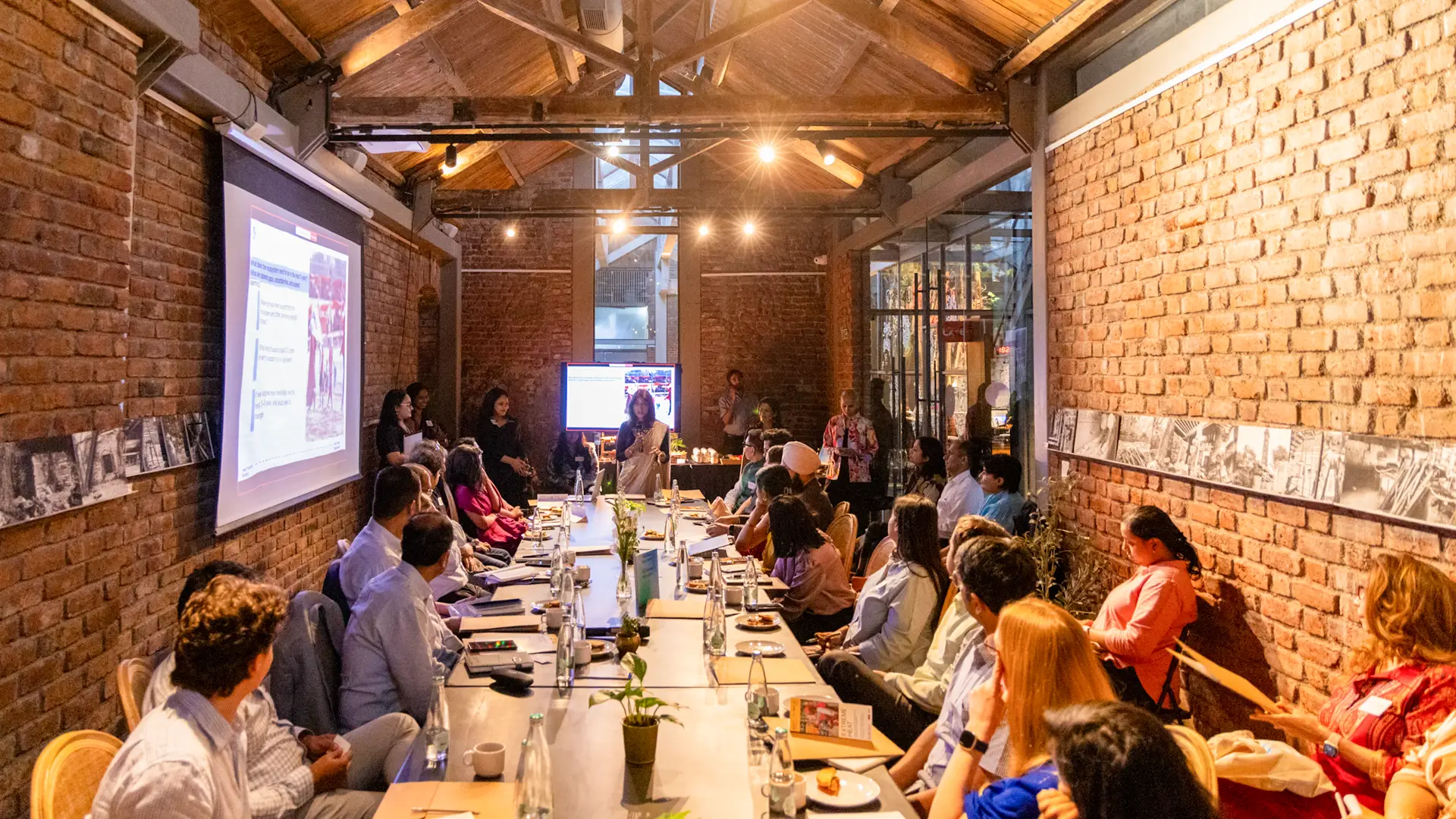
Heat demands systems thinking.
The heat briefing, anchored by the ICC in close partnership with Philanthropy Asia Alliance, brought together senior leaders from over 25 international and domestic philanthropies, CSR, family foundations, and domain experts to share insights from their work on extreme heat by surfacing on-the-ground experience, emerging evidence, and institutional lessons. The discussion moved the room away from viewing heat as a seasonal emergency and towards recognising it as a structural stressor already shaping how cities function, how people work, how children learn, and how public systems absorb strain. The session enabled candid reflection on what is working, where Heat Action Plans are constrained by financing or governance fragmentation, and how informal workers continue to bear disproportionate exposure. Three experts helped set the context and anchor the discussion in practice and policy. Soumya - MSSRF, highlighted the need for deeper scientific grounding and institutional strengthening to better assess and manage health risks associated with rising temperatures. Shaun – PAA, pointed to the Coalition as a model of coordinated philanthropy bridging climate and health agendas. Ashif – Jan Sahas, framed heat not only as a climate or meteorological issue, but as a labour rights and income security crisis for informal workers and shared a frontline parametric heat insurance innovation for vulnerable workers. Overall, the exchange enabled participants to compare approaches across labour protections, public health systems, and municipal governance, sharpening a shared understanding that heat resilience must be institutionally embedded, through financing, regulation, and accountability. For philanthropy, the role is to strengthen institutional capacity, invest in credible evidence, and support systemic evolution so that resilience becomes embedded rather than episodic.
Building Liveable Cities – Strategic Planning for an Improved Quality of Life

Speakers: Siddharth Sharma - Tata Trusts, Amit Chandra - ATECF; Ashif Shaikh - Jan Sahas; Neha Kumar - Climate Bonds Initiative;
Sheila Patel - SPARC; Shrikant Vishwanathan - Janagraha; Sujit Nair - FIDE; Rishika Das Roy - ICC
Liveability is the institutional expression of climate resilience.
In his keynote, Siddharth Sharma invited the room to recognise climate risk as a daily systems reality. He framed liveability as an institutional responsibility, calling for a shift from plans to systems, from infrastructure to institutions, and from city as market to city as commons. His remarks set the foundation for a deeper examination of accountability and inclusion in urban governance. The panel extended this framing into lived experience. Sheila drew attention to the invisibility of climate vulnerability in informal settlements that fall outside formal planning logics. Ashif highlighted migrant workers whose labour sustains cities, yet whose exposure to heat and precarity rarely informs policy priorities. Amit highlighted the importance of making different stakeholders talk to each other and the role philanthropy could play in enabling that. Shrikant reflected on the ambiguity of ownership within urban governance, questioning who carries responsibility when systems fail. Sujit brought the discussion to digital infrastructure, noting that fragmentation in data systems often mirrors fragmentation in authority. Neha highlighted the importance of repurposing existing finance mechanisms to meet climate financing needs. The conversation arrived at a consensus with resilience depending as much on institutional coherence as on physical infrastructure.
Future Cities, Interlinked Realities: Governing Climate Shocks in the Global South

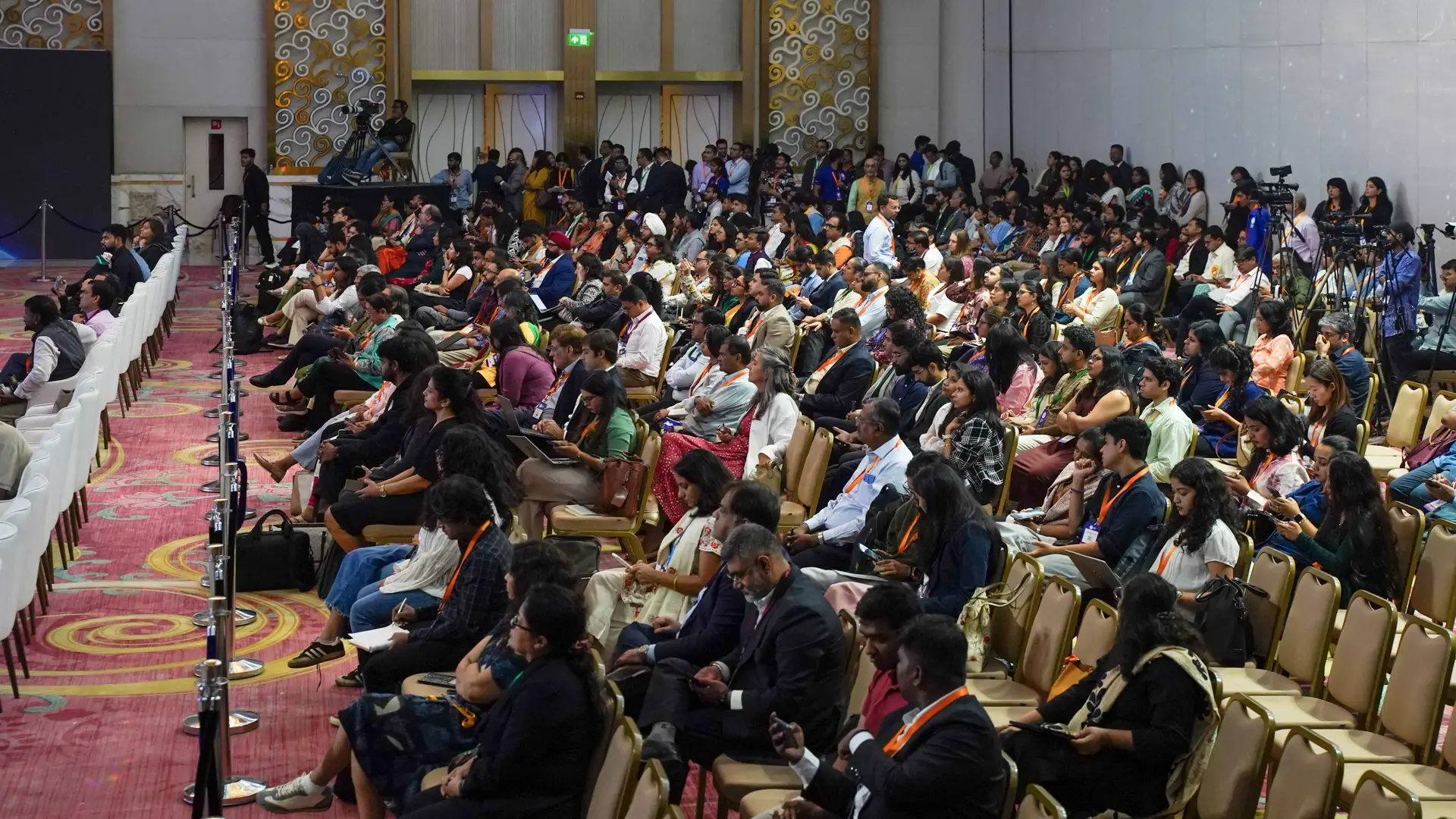
Speakers: B.V.R. Subrahmanyam, NITI Aayog, Dr. Anshu Bharadwaj - NITI Aayog; Ayushi Ashar - Ashar Group; Maria Netto - ICS; Madhav Pai - WRI; Nyrika Holkar -
Godrej & Boyce; Rohini Nilekani – Rohini Nilekani Philanthropies; Dr. Shankar Deshpande - MMRDA; Shloka Nath - India Climate Collaborative
Climate risk is structural, and institutions must internalise it.
This plenary widened the lens from neighbourhood-level service delivery to the scale of metropolitan systems. Heat, flooding, housing, transport, and air quality were discussed as interdependent realities that shape urban life. Maria and Madhav reflected on India’s opportunity to define a Global South pathway to resilient growth, one grounded in coordination rather than fragmentation. Rohini called on philanthropy to serve as connective tissue across sectors, helping align institutions that too often operate in silos. Dr. Deshpande drew from the Mumbai Metropolitan Region, where flood reform, ecological restoration, and mobility expansion have required sustained institutional coordination at scale. Anshu highlighted the urgency of adopting a mitigation–adaptation dual track strategy. Nyrika reminded the room that much of India’s future urban fabric remains unbuilt, and that today’s decisions will determine whether resilience is embedded or vulnerability is locked in. The session ultimately returned to a deeper question, not whether cities can adapt, but whether governance, finance, and planning can align quickly enough to make that adaptation possible.
Funding resilience, not just response: Reimagining the Role of Philanthropy in Community-Centred Disaster Risk Reduction
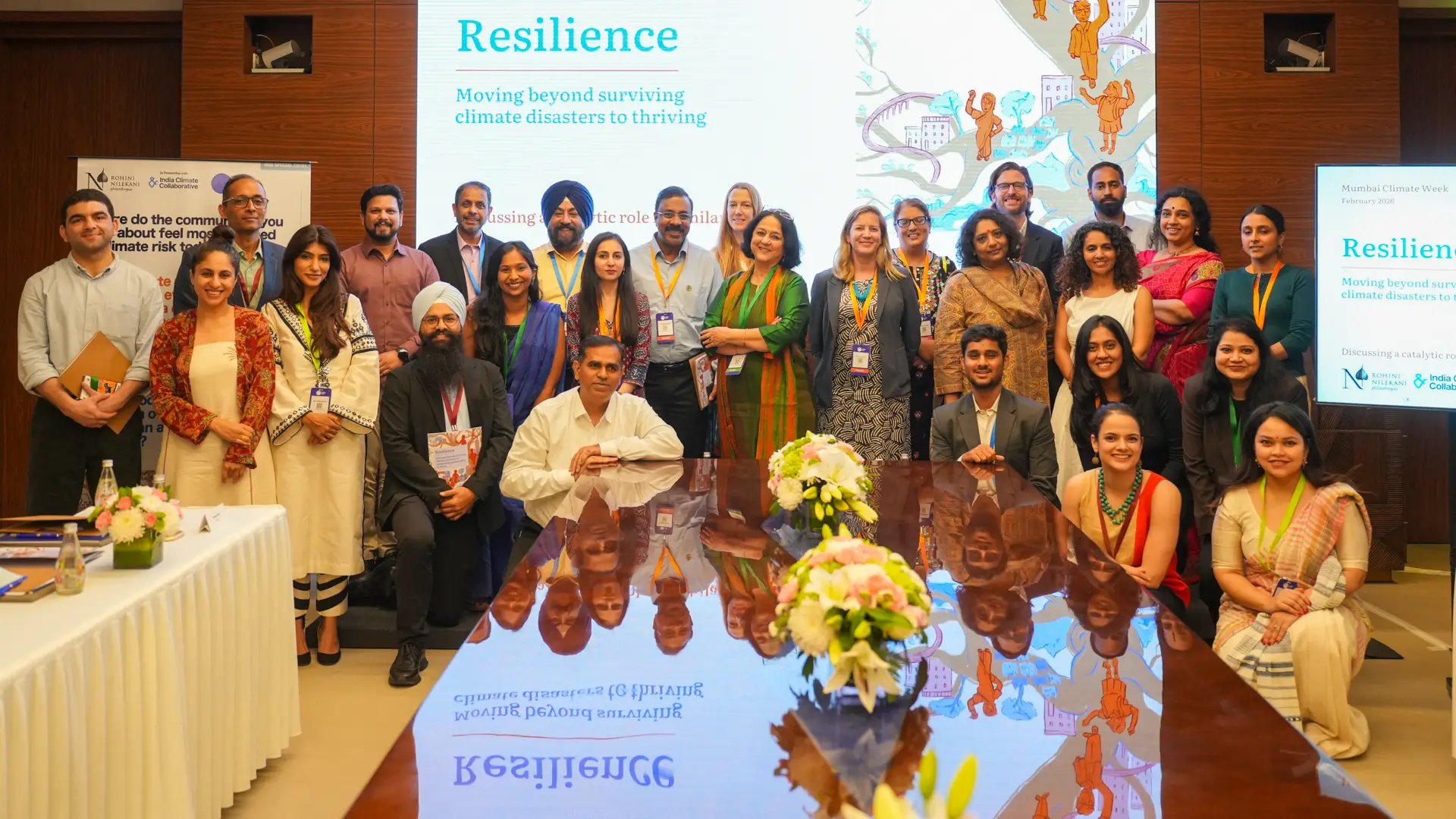
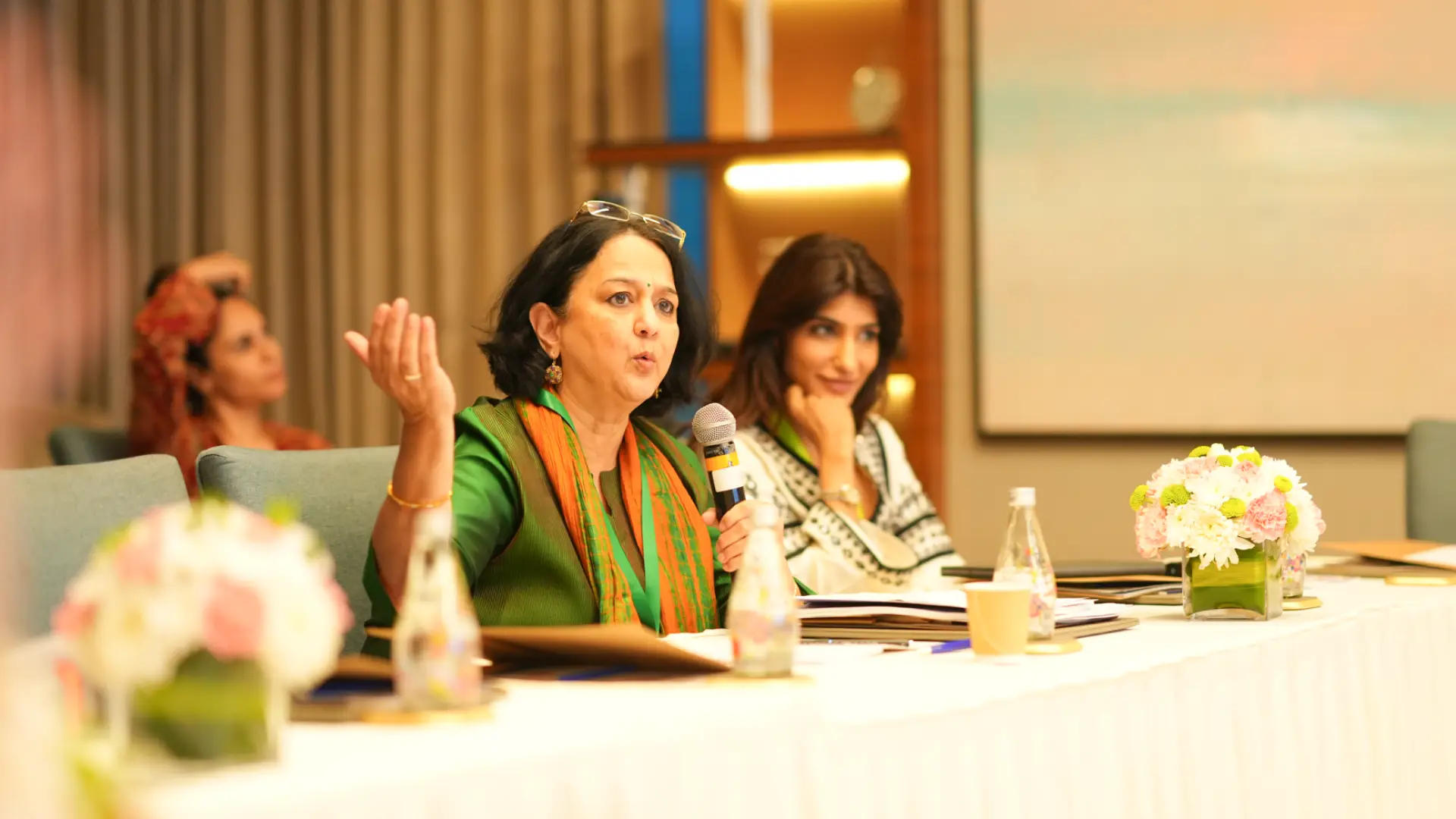
Climate risk is permanent. Response cannot remain episodic.
This roundtable by Rohini Nilekani Philanthropies (RNP), bringing together philanthropies and foundations, created space for a candid reflection on the nature of climate risk. Disasters were described as recurring features of contemporary development trajectories. Participants explored resilience through five interdependent capitals of physical, financial, human, social, and natural, agreeing that rebuilding infrastructure alone does not restore stability if social and institutional systems remain fragile. There was a clear acknowledgement that funding ecosystems often privilege visible response over prevention. Avoided loss is harder to measure than reconstruction, and therefore harder to finance. The discussion gradually shifted toward the importance of long-term trust, community partnership, and anticipatory finance mechanisms that reduce vulnerability before crises unfold. Philanthropy’s role was articulated not as a substitute for government, but as a catalyst for absorbing early risk, strengthening local institutions, and enabling reforms that may be politically difficult yet structurally necessary. The tone throughout was reflective, grounded in a shared understanding that resilience is relational before it is technical.
Written by Apurva Desai, Senior Communications Manager at the India Climate Collaborative

Related

Scaling agroecology in India: The role of donors and funders
Dr. Ajita Tiwari Padhi, Senior Specialist-NbS and ...

Climate solutions: Urban Farms Co. (Regenerative Agriculture)
Urban Farms Co. discusses how they are making rege...
Shaping climate finance negotiations at COP27
This year has been taxing the world; rising inflat...
Subscribe to our Newsletter
Join ICC's monthly newsletter and read more about uplifting climate narratives, innovative solutions, and other updates.
