
All of last week felt like a collective pause, a moment to ask whether the systems we are building are strong enough to hold the future that is already unfolding. Through the conversations ICC anchored and enabled, climate actors came together in a shared recognition that responsibility for this planet sits with all of us. What is discussed in these rooms must move beyond silos and closer to the people at the frontlines of this transition. Most importantly, there was a growing conviction that philanthropy in India can help unlock the country’s potential for Global South leadership, grounded in local wisdom, innovation, technological capability, and a deep commitment to stewarding the world we belong to for generations beyond our own.
Here are highlights from those conversations.
Shloka Nath X Hillary Clinton, Fireside

Climate leadership demands power shifts in philanthropy, in geopolitics, and in economic systems.
Secretary Clinton, in her conversation with the ICC, reflected on the Clinton Global Initiative’s commitment model, underscoring that convening only matters when it produces accountable action across climate, health, gender equity, and economic opportunity. She recognised the Global South’s growing leadership in shaping agendas, while also noting the persistent barriers in finance, trade, and geopolitics as constraining conditions. Just climate action, she pressed on, must align development and decarbonisation rather than treat them as trade-offs. She called for philanthropy to evolve toward catalytic capital and systems change. On AI and labour transitions, she emphasised urgent investment in skills and inclusion, particularly for women and youth. The conversation concluded on resilience, with Secretary Clinton reflecting that persistence, community, and continued engagement remain the foundation of enduring leadership.
After COP30 — What Next? A Multi-Stakeholder Dialogue on Priorities for India & the Global South
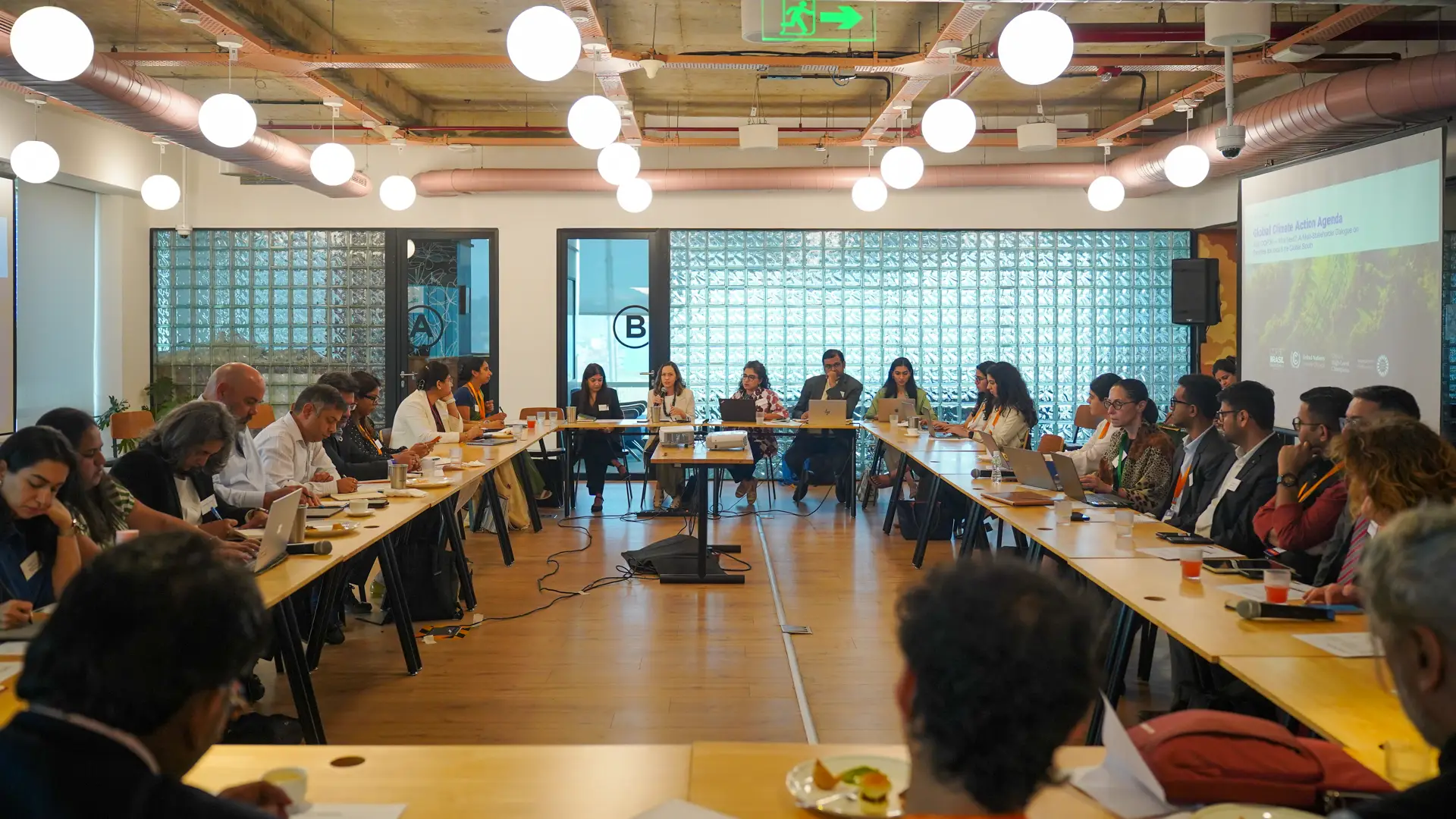
India and the Global South must move from agenda-setters to delivery leaders.
In this roundtable, senior climate leaders from civil society, philanthropy and the private sector along with the COP30 Presidency were in attendance. Under the leadership of the Climate High Level Champions, the Global Climate Action Agenda of COPs brings together over 480 coalitions of countries, subnational governments, businesses, investors and civil society who are willing to act. India and the Global South are hubs of solutions that make sense for better productivity, development and better lives as we all face climate change. With 56 decisions agreed, the COP 30 Presidency has advanced a two-tier approach to multilateralism, in addition to the first tier of consensus that sets the rules and provides collective direction (that is what happens in negotiation rooms), is the complementary second tier of implementation (that is what happens outside of negotiations) that brings together coalitions of the willing to deploy resources, scale solutions and move faster on delivery. The COP30 Action Agenda six axes, activation groups, and accelerators have been designed to create continuity across presidencies, to mobilise a diverse range of stakeholders, and enable progress to be tracked more consistently beyond the annual negotiation cycle. Participants recognised the growing importance of Global South collaboration, country platforms, and restoration agendas that connect climate, food security, and development. They also highlighted sub-national governments as essential delivery partners and reflected on a more assertive Global South and the rising centrality of trade and economic policy within climate negotiations. Participants who directly engaged on the COP30 Action Agenda on themes including SMEs, digital public infrastructure and business engagement, shared their experience of the value engaging in global processes has unlocked for them. There were also discussions on opportunities for deepening global engagements for advancing domestic climate action. Across the dialogue, there was appreciation for multi-actor partnerships, South-South cooperation, and investable implementation pipelines to translate commitments into durable action.
CSR and Climate Action: Catalytic capital for a resilient India
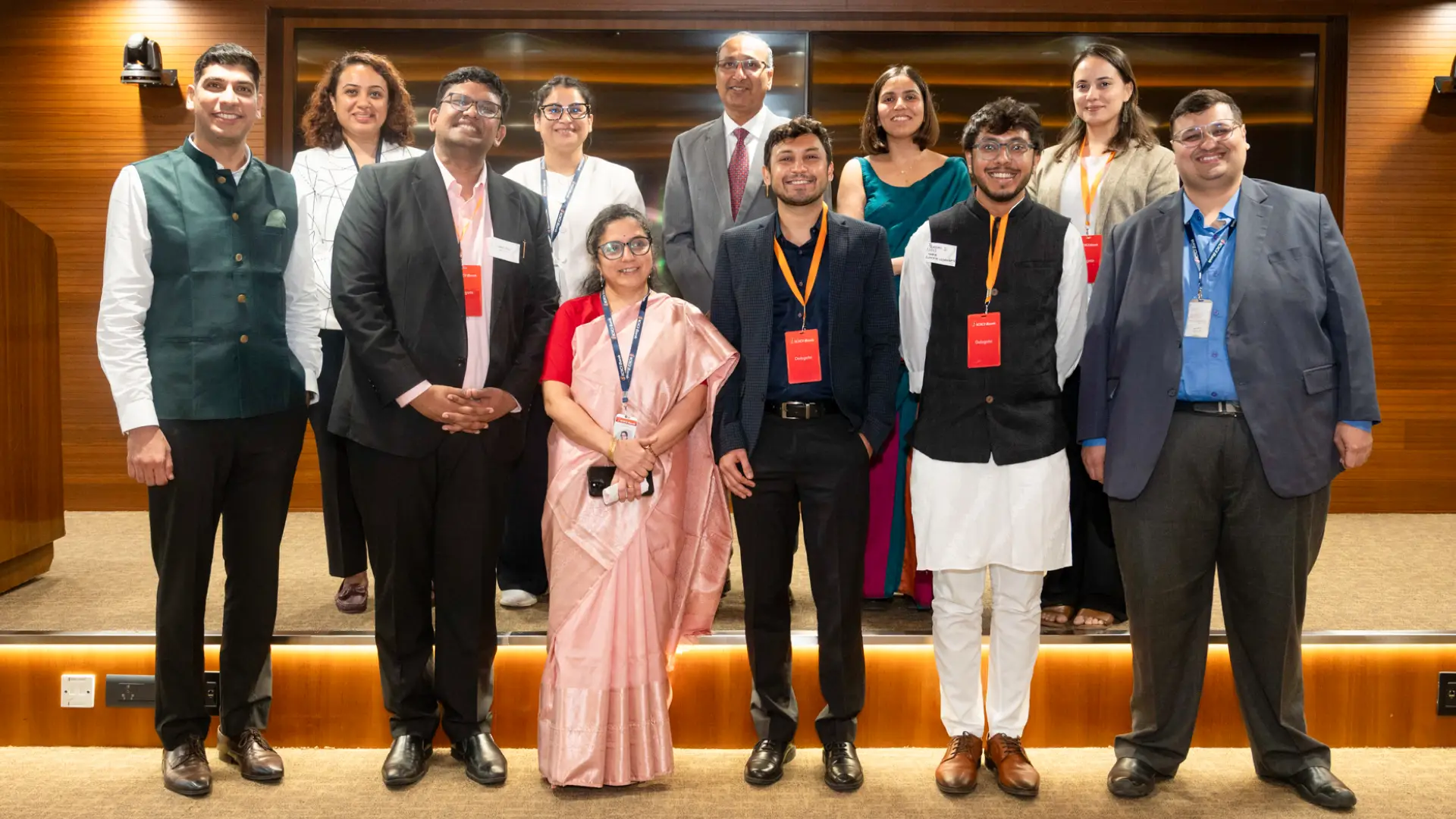
Speakers: Anindya Banerjee - ICICI Bank, Prerana Langa - Aga Khan Agency for Habitat; Raman K - Hinduja Foundation; and Sashidhar Vempala - Unilever; Sowmya Suryanarayan - Aavishkar Capital
For CSR to deliver sustained impact, resilience must be at the core of portfolio design
This CSR and Climate Action roundtable co-hosted by India Climate Collaborative, Mahindra Group, and ICICI Foundation for Inclusive Growth and supported by JSW Foundation convened leaders from corporate foundations, philanthropy, sustainability, and impact investing, to reflect on how CSR must evolve in a climate-uncertain world. The discussion also marked the launch of ICC’s latest thought leadership piece, now available to access here, which invites CSR to rethink its role in strengthening climate resilience.
Shloka from the India Climate Collaborative (ICC) opened the conversation by noting that climate action is not a competing priority but the condition that determines whether development gains endure. Ankit from the Mahindra Group, highlighted adaptation is critical for safeguarding workforce ecosystems and supply chains, particularly in India, yet it remains under-integrated in CSR. Smriti from the ICC, urged organisations to climate-proof existing investments rather than treat climate as a standalone vertical, while Siddharth from the ICC framed the newly launched thought piece as an invitation to collectively rethink how climate action is perceived within CSR, highlighting India’s vast climate finance gap. Panellists recognised CSR’s role as an accelerator rather than a primary financier of large-scale transitions. The discussion emphasised the need to embed a climate lens across CSR portfolios, strengthen climate literacy within institutions, unlock risk-tolerant capital to pilot and scale innovation, and deepen ecosystem collaboration. The shared insight was that CSR must evolve from funding isolated programmes to strengthening the systems that sustain them and placing resilience at the core of responsible development across sectors.
Written by Apurva Desai, Senior Communications Manager at the India Climate Collaborative

Related


Subscribe to our Newsletter
Join ICC's monthly newsletter and read more about uplifting climate narratives, innovative solutions, and other updates.
